Wednesday, February 20, 2013

Mongolian vodka

(Please back date to 2/15/13)

A distant view of the bridge over the Angara River
As the title of the post implies, my evening last night consisted of my first real taste of Siberian hospitality. My Mongolian compartment mates and my two Aussie companions, Sean and Karen, destroyed two bottles of Arkhi, authentic (and quite good) Mongolian vodka. As you can well imagine, train rides through this part of the world are long and nothing passes the time like a good drink. The tradition on these trains is of sharing with your buddies, and oh did they share. Once the vodka started flowing, so did the conversation, a mix of English, Mongolian, and hand gestures. The Mongolians were students in grad school in Irkutsk. I don’t remember their names (they were authentically Mongolian sounding, rest assured) but I do remember, through our vodka induced conversation, that the guy, 26, was studying architectural engineering and the girl, 25, was studying medicine, and both planned to use their studies to get jobs and help develop UB.

But I (well, all five of us) drank too much. When we pulled into the station at half past 6 in the AM, I was still sleeping and so were my two Mongolian friends. Our provodnista had to come knocking on our doors to get us moving. Dizzily, I gathered my belongings and stumbled off the train to the frigid Siberian air on the platform in Irkutsk. Russia! I’m here.

I was bundled up quite nicely apart from my very exposed face so the walk from the hostel made me forget all about my hangover. I knew where I was going. I had researched ahead of time how to get to the hostel in the middle of the city about 3 km away. But getting there required that I cross a bridge over the large, beautiful, and frigid Angara River, the river that flows west from the bottom of Lake Baikal. And it was 6:30 in the morning. By the time I got to the bridge the sun was just rising above the horizon over the river, the sky lit in purple and orange, and the moment I stepped onto the bridge I was immediately hit in the face with a wall of real, Siberian wind blowing in from the river. My body was fine (I bought some boots in Mongolia, my toes are now happy), but my face had never experienced something so naturally offensive. My nose was dripping, the steam from my breath collected on the pathetic excuse I have for a beard and froze in droplets, my eyes were tearing. But the river, through my tears, was remarkably beautiful. The river never freezes despite the temperature because it flows so quickly and in such volume. But huge pieces of ice, broken from the lake which does freeze upstream, flow along the surface of the river. It looks magical. But it was hard to appreciate the beauty of the scene, the sunrise, the ice in the powerful river, when you’re being hit with thirty knots of Siberian wind.

I did make it however. The hostel was easy to find. It is set in the downtown area of Irkutsk on Lenin Street (obviously) and I was greeted by a very friendly Russian girl with very good, accented English and was easily set up for the day.

I decided to spend the first day just walking around, seeing the sights of the city. I had my guidebook which helped me locate some beautiful churches, some museums, and a few statues (Russians love their statues). One of the more interesting places I visited was the Volkonsky House Museum, a large 19th century mansion near the center, constructed for a bougeios member of the original Decembrists, activists during the Tsar period, committed to exile in the Siberian far east. The house was really cool and the staff had done an excellent job maintaining the original house as it was back then. The Decembrist (and more famously, his wife that followed him into exile) threw elegant parties for the city’s VIPs and was very important within the developing city. There was loads of information about the history of the family members, the Decembrists, and the city in English. But I was the only visitor that day and the old women who make up the small staff of the museum were very excited I was there. They very quickly found out that I don’t speak any Russian and I very quickly figured out that they don’t speak any English. So it was odd when in each room I visited I was followed very closely by a small, eager, Russian babushka with reading glasses who supplemented my reading with loads of information in Russian. She didn’t care that I didn’t speak Russian. As long as I nodded in attention and interjected with things like, “Oh?” and ”Mm hmm” and “OK”, she was quite satisfied.


The main hall of the Raising of the Cross Church in Irkutsk
I visited a few other small museums and statues but mostly I got a feel for the city. I had been to Russia before. My ship (when I worked in the Navy) pulled into Vladivostok, a coastal city on the Pacific, near Japan, for a week so I got a sample of Russian culture there, but I was again reminded of how unique and interesting the people are in this country. Russians can’t speak English as a whole. That’s not unique but it is for a country of Caucasians. The women are stunning and wear fur and high heels - all of them. The people are mostly unfriendly and can be off putting (not all the time though as I am finding) but aren’t off putting if you engage them. In fact they are quite friendly and are very willing to help if asked. The city itself is unique, even as a Siberian city. Most buildings, houses, structures that date to the city’s founding in the mid-18th century are made of wood with very intricate patterns carved into the edges and siding. They are all unique. The houses are mostly plain colored, brown usually, but the edges and doors are painted vibrant colors. And most of these houses are the originals (except for a large portion of the city that was ravaged by a fire in the late 19th century) and are partly sunken below the surface of the ground. A lot of the houses are crooked or slanted with corners of the structures partly submerged into the earth. An interesting sight.

Irkutsk is famous for its Siberian style of wooden architecture, some of it sinking into the ground
The highlight of the day though was my visit to the orthodox Bogoyavlensky Cathedral. It was late in the day and I was very tired and wanted to return to the hostel for a rest (my hangover was gone but I was still pretty exhausted from last night). I almost skipped it but decided at the last minute to duck in. When I first walked through the heavy wooden doors I was greeted with sweet, Russian choir music. A quartet of singers were rehearsing presumably for the weekend’s services. And they were so remarkably talented. The music hung in the air of the cathedral as I wandered around admiring the very beautiful paintings along every inch of wall and ceiling as well as the skillfully crafted statues of saints and the Holy Mother. Orthodox churches (apparently, from my noticing) are partitioned into various rooms with one a bit larger than the others. There is a pulpit but no pews, just a large standing area. Churchgoers were constantly coming in and out, genuflecting and praying in front of various statues and paintings, lighting candles. I walked slowly around the church, taking in the artwork, and then I stood in the back, observing the churchgoers in prayer and listening to the choir. It was a very peaceful end to a very busy day. I returned to the hostel in a very good mood.

The one hostel employee, Jane, is a local girl from Irkutsk and we stayed up late chatting in the common kitchen area. She invited some of her friends over and we, plus a German traveler, talked about a range of topics from politics (all Russians love this topic) to languages (Jane is fluent in Russian, English, and German) to travels. We shared a few beers (I opted out, I needed a break), and then the conversation moved to travel in Irkutsk. They were thrilled that we, me and the German, Ronny, wanted to spend some time in Irkutsk and see Lake Baikal and were disappointed that we intended to stay only for a few days. I get the feeling that Siberian Russians are fiercely proud of their home regions but are surprised that people want to visit. Irkutsk though, has gone a long way recently to encourage tourists to come. They said the city has recently spruced up its infrastructure and museums in an effort to attract visitors. I think its location along the famous railway and its proximity to the lake is enough attract travelers (like me). But these girls want people someday to come for the region and the people as well. I think they probably will.

So, my first day in Russia was a good one. Tomorrow, I’m on a bus to Listvyanka, a village on the shores of Lake Baikal, the largest freshwater lake in the world. It’s going to be good!

K263, Russia!

(Please back date to 2/14/13)


Happy Valentine’s Day! I walked from the hostel with my luggage (a large, black, North Face duffel bag that I can wear as a backpack, and a small black backpack that I use for my camera, and a Swedish blue and yellow Ikea shopping bag embroidered with the Chinese symbol for new year that I use to keep my train stuffs in: food, wetknaps, vitamins, coffee, etc.) to Sasher’s for one last meal of Russian goulash and a pint of Chinggis Khan Beer and to buy a loaf of bread for the train ride. This is the one train leg of the Trans-Siberian that has no dining car so 36 hours of food must be brought along with you.

Then I walked the 3km from Sasher’s to the train station (or воксал, voksal, a word appropriated into Russian after the famous Vauxhall Station in London) where I met up with another two Aussie travelers I had met the last night at the hostel. Shaun and Karen, a couple from Brisbane, had just gotten into UB after a week long adventure through Tajilk NP by dogsled. They had been traveling the world for over two years after selling off some decent property investments in Australia. The three of us sat down and rested, waiting for the train in a small cafeteria-style restaurant in the station waiting hall. We ate a few Mongolian meat pies while at the next table over, a very drunk Mongolian man made gestures at Shaun with his hands, swaying in his seat, to indicate something like, “you, me, outside, let’s fight, eh?” Shaun is a big Aussie and just shook his head to indicate that he didn’t want to and then went back to eating dumplings. The drunken Mongolian also looked in my direction and I politely declined the offer.


Ulaanbaatar - Irkutsk
We hopped the train thirty minutes or so before departure. This train is a little older looking than the last train I took out of Beijing: no imbedded television monitors, no electrical outlets, no automatic samovar (just a steam kettle - but it works) and no compartment to myself. My cabin mates are two Mongolian guys in their twenties, transporting boxes of Mongolian goods to Irkutsk. They have a case of Arkhi, Mongolian vodka, and various boxes of Mongolian dry goods. They don’t speak English so conversation isn’t really happening. But in any case it was late and we all slept pretty quickly.

The train rolled to a stop around 5AM, in a small station near the Russian border called Suche Bator and we sat here at this station until about 11AM. I woke up around 7 and, realizing the train had stopped, understood that the doors to the bathroom would be locked. I put on my coat and hat, and stepped off the train onto the platform. The light was just coming up over the snowy hills and I looked around the deserted station and then back at the train. It was just my car, isolated, sitting on the tracks by itself without any other cars, or an engine, nearby. You could see the steam bellowing from the stack above the door. Puzzled, I walked to the bathroom on the platform and brushed my teeth. I came back to the platform and found other puzzled passengers (foreign ones) looking around as well as if to say, “Where did the rest of our train go?” I took some photos and then went back aboard and patiently waited in the warmth of my cabin.


Our lonely train car
Around 10, an immigration officer came aboard to collect our passports and customs papers while the three of us stepped out of our cabins so that another official, in camouflage, could take a look around. This one was more thorough but all was well. We got our passports back thirty minutes later, reconnected with an engine car, and rolled out of the station steaming towards Russia. We’re north of the Mongolian Steppe now. No more flat, rolling grasslands. We’ve entered the very southern portion of the Siberian Taiga, the largest evergreen forest in the world. Plains are slowly giving way to hills and frozen lakes, lined with huge, beautiful pine trees.

We eventually rolled across the border and slowed to a stop in a place called Naushki, another border station. Our car was again jolted into isolation and an entourage of military members came aboard and asked, in Russian, for everyone to return and remain in their compartments, and one by one they checked passports. In my compartment, third from the front, I was first approached by a Russian man in a police uniform donning a fur hat, Russian style. He asked the others if they were Mongolian, they said they were, then he asked me for my passport. He looked at me with a humorless expression, eyelids half covering his eyes, and flipped through each page repeating with a thick Russian accent, “veeza, veeza, veeza...” slowly trailing off until he found my visa. Satisfied, he moved on. Next, a large blonde woman with heavy blue eye makeup walked into the compartment and collected our passports. One by one she flipped open to the picture page, looked at us and back at the passport, then entered in some information in her digital notepad before stamping and returning it. This is the first time that all of the immigration process was taken care of onboard.

She moved on and a small, mousy woman in military overalls asked us to step out of the compartment while she poked around the seats and hopped up into the upper storage compartments. After a minute of poking around she left and we returned to our seats. Following her was a slow, fat man, a customs officer, who poked his head in and asked the Mongolians (who apparently do speak Russian) some questions. Then he made them open all of their bags and boxes, remove every item they owned while answering very thorough questions. They had to ruin their carefully taped boxes in the process. After he was satisfied with my Mongolian cabin mates, he turned to me, asked to take a look into my food bag, and, quickly satisfied, left to move on to the next cabin. Last to drop in was a man in a blue camouflage uniform with high, black boots, again asked us to step out, and led a dog in to sniff about the compartment. The dog was thorough but he too found nothing. The Russian officer gave us a, “spacebo”, and then we returned once again to our seats. After about another hour or so of this, the immigration officials were finally satisfied with the train car and we were able to get off and walk around the tracks and up to the small station. The Russians were not kidding around.


My compartment aboard K263
Naushki Station, border town in Russia
We first went to use the bathroom. We found the public restroom at the end of the platform and between the entrances to the men’s and women’s sides was a small office with a sliding window where a plump, Russian woman sat waiting to collect money. The privilege of using the restroom is worth 10 rubles (or about 30 cents) - 10 more than I had in my pocket. So I and three of the Aussies with me (the original four Aussies from the first train were on this train as well in addition to Shaun and Karen) wandered around the station looking for an ATM. We were directed into a waiting hall filled with soldiers. There was at least a hundred young recruits, probably awaiting a train to take them to some base, or home. They were decked out in uniform fur boots, green pants and jackets, and brown fur hats and each had a large, canvas rucksack. They all stared at us as we walked in towards the ATM. Luckily, we obtained rubles. The Aussies returned to the woman to pay her for the toilet, she smiled and refused them, explaining she couldn’t break the large bills the ATM gave them. I relieved myself behind a train.

We eventually got rolling again. What I hadn’t realized when I booked the tickets for the train is that this leg of the journey goes along one of the most beautiful stretches of Siberian taiga and the banks of Lake Baikal and is generally considered by travelers as the most attractive section of the trip. And we were going to pass all of this through the night. We left the Russian border in late afternoon, it was soon dark, and we won’t pull into the station in Irkutsk until about 7AM. Oh well. You win some, you lose some. Irkutsk tomorrow and then Lake Baikal soon afterward.

Youth of Mongolia, put down your pipes! or Best of UB

Today was my last day in UB. My train tonight leaves at quarter past 9 and so I had plenty of time to wander around the city and see some of the sights that I missed out on yesterday. Much to my delight, most Mongolians are coming back to the city to reopen the shops and restaurants so I basically had my first chance to buy some basic, but necessary items like water, food, boots, etc.
 

I first walked to the southern end of Sukhbaatar Square to first see if the Museum of Political Persecution was open but this one was unfortunately still closed. This little, niche museum is supposed to have some very powerful exhibits that describe the history of the Communist purge of its monks, professors, etc in the 1930's. It acts as a historical account of the actions that were taken and as a memorial to those that died. I didn't expect it to be open though, small museum as it is, but these types of regional museums are by far the most interesting. I was hoping...

But next to the museum was the Choijin Lama Temple, an old Buddhist temple that has been out of service since 1938 but the government spared this one as well as the monastery I saw yesterday in order to turn it into a museum, one that is still run today. The first few structures of the complex aren't too exciting, mainly normal temple gates which lead to the main temple hall that houses a very nice selection of Buddhist statues of various warrior deities. All have angry faces, painted red and blue, riding various animals consisting of dragon heads with lion bodies. The deities are holding staffs and spears and their eyes bulge in rage out of their heads. They line the walls of this hall and surround a more serene, golden statue of the Sakyamuni Buddha - a calm, lotus flower holding Buddha in and amongst raging deities.


But this wasn't the interesting part. Once I circled around to the back portion of the serene Buddha statue, it led me to a hidden back temple hall, smaller and darker, with a collection of the most grotesque and fearsome looking statues and paintings I have ever seen in a Buddhist temple. The center of this room was a large, empty seat made with delicate, patterned cushions, too big for a normal man. The walls were further ringed with warrior deities except these one were less than human looking. Some had skulls for heads with three eye sockets and wearing a crown of smaller skulls and flames rising up through the backs of their spines. Others had multiple heads, painted red, with glaring fangs dancing on the broken bodies of humans. Others had hundred of arms, each holding a different weapon. All of the statues were three times the size of a grown human and all were in some warrior dance pose. Behind them were murals painted along the walls and on the ceilings. All of the scenes depicted humans in various forms of suffering. There were graphic paintings of human heads torn from their bodies, people torn in two, getting stabbed, etc. The entire room was filled with this kind of stuff. It was very intense and very old. The room was poorly lit which added to the effect and every corner of every inch of the room was painted or was filled with statues both large and small. A bit frightening for a child but sort of a hidden gem of a collection of Buddhist art work. This museum is an undersell.


I left the museum and, hungry, found a western cafe called Millie's Cappucino. It looked just like an American diner and had the menu to match. I ordered a tuna sandwich with fries and an apple juice. The small diner was full with huge expats. Just really fat people. Some of them were American, some English, some Australian, all of them speaking English with some sort of accent. I found out later that this was a popular spot with diplomatic folks, being in close proximity to the embassy district, but also western contractors and various other entrepreneurs from the west. It is really quite interesting to see the kind of expat this city draws. Most cities I have been traveling to, if they had an expat crowd, were usually either students, sometimes diplomats as in Beijing, or young professionals working for foreign IT or car companies. UB attracts resource tycoons. Since the country is finally opening up its vast countryside to drills, big men from the English speaking world have moved in. For some Mongolians, this means a lot of money moving in very quickly and now the city, amidst the poverty, has opened Louis Vuitton and Gucci shops. I was at one of the original expat pubs last night, a very swanky Irish pub. The place was packed. Half of the people were the western expats earlier described, but the other half were these nouveau riche Mongolians. There is a pretty interesting and unique effect happening in UB.


I also did some chores. I went food shopping at the local supermarket and picked up some cheese, salami, bread, gherkins, stuff like that for the train ride. I am so happy to be eating like a western person again! I bought some boots, some German made winter boots to keep my toes toasty warm, and I packed up.


I'll quickly share some other interesting points to ponder about UB before signing out for a few days. The taxis are awful here. They aren't labeled and there is no system in place to monitor them (even though they have to "register" with the police first). A couple of days ago Nilika, Anna (the British girl from the orphanage), and I went to take a cab from the the bus station that took us back into town from the village where the orphanage was located to our hostel, and I asked Anna, "how do you know which ones are taxis?" She replied, "They're all taxis." You just kind of hop in whichever car stops for you, the driver restarts the odometer (hopefully), and you are charged an often secret or arbitrary rate based on your mileage. Ours luckily was an honest cabbie.


Another weird thing about UB (and I only read about this), is that there exists an entirely underground community of homeless people during the winter within the cities sewer systems. Apparently, there are little options for the homeless in this city and since it is so cold, sleeping without shelter or a heat source in the night can be lethal. In fact, Mongolia has a problem with deaths in winter due to drunkenness, some people pass out in the street and freeze. It's terrible. But I believe that this underground society actually exists because every once in a while I came across an open manhole while walking the streets and, peering down them, it became clear that people have created make-shift ladders that lead down into them. Or some manhole covers are only half covering the manholes themselves - obvious signs.


Lastly, UB is home to much graffiti. Mostly youth, activist graffiti. A lot of this style of graffiti are messages of action, political messages and the like, but a lot of them too are just hilarious messages written in English like, "Don't worry, be happy," or "Piss here (with an arrow pointing to a drain on the sidewalk outside a pub)". My favorite today was, "Youth of Mongolia, put down your pipes! (is it in reference to drugs, weapons, flutes? I don't know).

 
I'll leave you with the best of UB. See you in Russia!


Me and a sleepy Mongolian child at the orphanage

Hanging out with the older teenage boys at the orphanage

A special meal at the orphanage for the White Moon festival

Children at the orphanage enjoying the festival meal

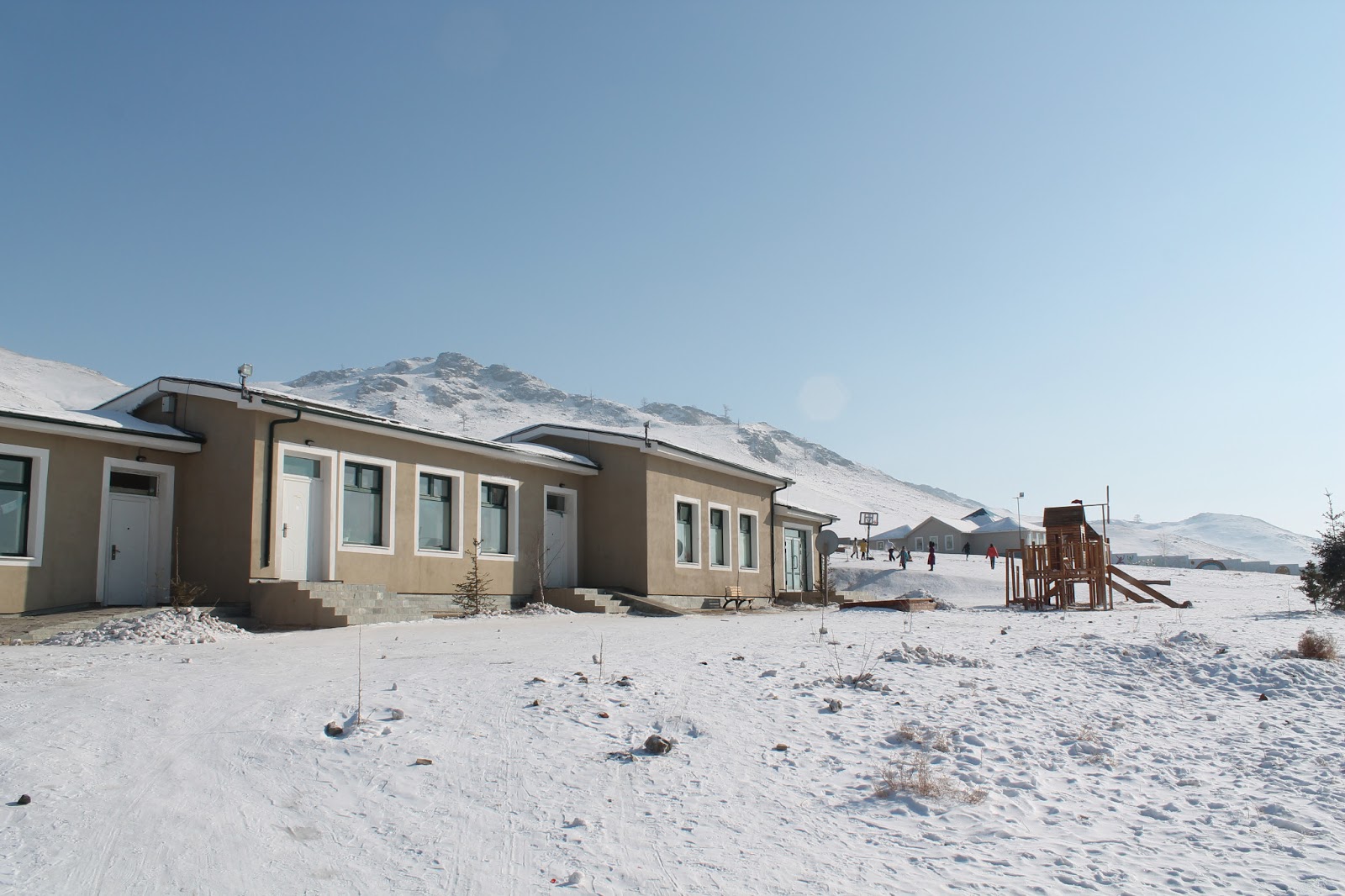
The Lotus Orphanage outside Ulaanbaatar, Mongolia

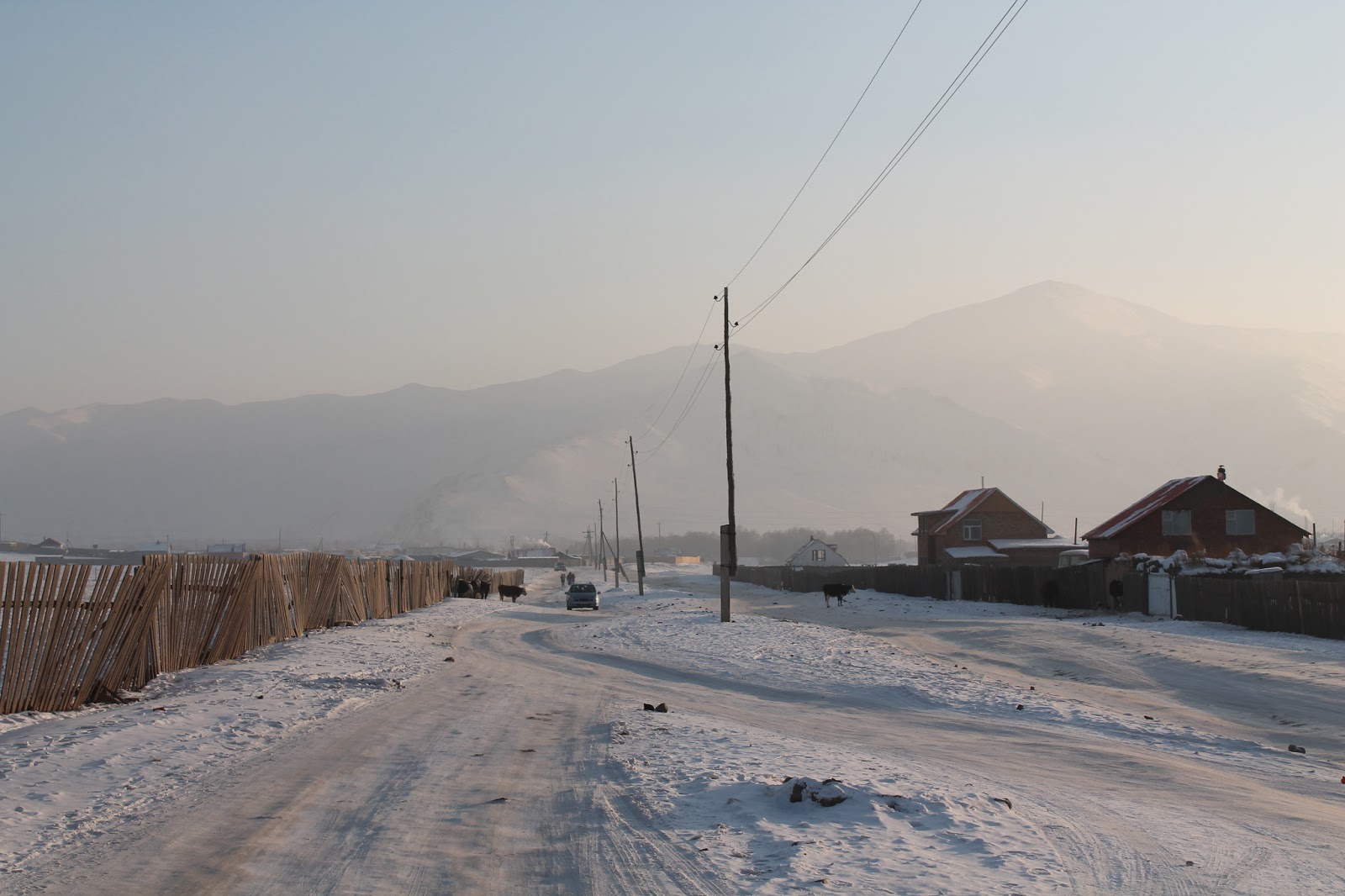
Village road leading to the Lotus Orphanage

The feet of Buddha, outside the Gandan Khiid monastery

25 meter statue of the Buddha in Migjid Janraisig Sum, the main hall of the monastery

Sukhbaatar Square, UB city center

Objectify much?

UB has some excellent English language graffiti


Tuesday, February 12, 2013

Where did Lenin go?

Small correction to yesterday's post: it was not an American diplomat that visited Mongolia ultimately saving Gandan Khiid (the monastery) from destruction, but US Vice President Henry Wallace in 1944 (VP to FDR?).

Today was all about UB. I woke up at a reasonable time and left to go see the famous Gandan Khiid Monastery (or Gandantegchinlen as it is referred to locally), about a 3 km walk from the hostel. As I talked about in yesterday's post, this monastery was saved from destruction in order to use as a diplomatic showpiece and prove to the international community that the Communists of Monoglia hadn't destroyed every last remaining ounce of Buddhist culture in the country. In 1937, much like China's Cultural Revolution, Mongolia, due to the influence of the Communist party, purged itself of religion, executing thousands of monks and burning almost all of its monasteries to the ground. Intellects, poets, academics, all were similarly purged or exiled and although the Communists have been out of power in Mongolia for decades (in fact, many in the international community think Mongolia today is a shining beacon of democracy that the West hopes will rub off on its less than accomodating neighbors), it was only recently that many of these monastaries have been rebuilt. But now, Gandan Khiid is a booming monastery with over 600 resident monks.

The monastery itself is home to a university of Buddhism (like a seminary) and many resident temples where you will find students, all in crimson robes and shaved heads, reading, reciting, and chanting mantras from the sacred sutras. And if you visit the monastery in the morning, some of the temples are left open so you can observe the monks during their lessons.

I got to the monastery around 10 in the morning. Even though most of the city is completely shut down for the new year, the monastery keeps on and there were many pilgrims visiting this morning as well. I think I was the only "tourist" (at least I was the only one charged entrance). The pilgrims come from all over the country to visit the monastery, pray in the temples for prosperity in the new year, and talk to monks who are trained to read their future. I was the only one with a camera.

Migjid Janraisig, the 26 meter tall Buddha in the main hall
I wandered into the main temple first, Migjid Janraisig Sum, a large hall that houses a 26 meter high statue of the Buddha, coated in gold. It is quite a sight. The hall walls are covered by hundreds of miniature statues of Ayush, the Buddha of longetivity. Ususally you are not allowed to take photos in places like this and rightly so, out of respect for the reverent. But before I entered I was charged an entrance ticket (the only fee in the whole monastery - it was small, I was happy to pay it) and there were three options: normal, with camera, and with video recorder. I chose "with camera" and then afterward didn't feel too badly about taking pictures of the Buddha and around the hall. Inside, pilgrims were crowding around the entrance waiting their turn to bow, make an offering, and pray in front of the Buddha. After they prayed, they walked around the temple's outer walls, the walls covered by Ayush, and, walking clockwise, spun the prayer wheels and then exited the temple. I did the same but instead of spinning prayer wheels, I snapped photos.

Temple prayer wheels, spun clockwise
I then moved on to the academic buildings, smaller temples filled with monks. I was lucky enough to observe one room filled with monks in chant. It was a small room ringed by a outer walkway where pilgrims (and I) could circle the temple. In the middle of the room were benches with long, thin tables where monks had books open and were reciting the words they were reading over and over again. They did this individually and it created an inharmonious hum throughout the space. But every once in a while, one monk would chant something loudly, above the other chatter, and then all the monks chanted together with him in unison. It was very peaceful.

I wandered around the grounds of the monastery for a little while longer but soon grew so cold, I could no longer move my fingers. I have thick gloves but I can't wear them and take photos at the same time. I needed to warm up. I walked back to the German cafe and ordered some cream of mushroom soup and some hot lemon water with honey (another excellent meal at this place - go to Sasher's Kaffe if you're ever in UB). I would normally regret not eating at a cheaper, more local place to try and experience some of the local food but considering this is the only place open in the city (besides a few other western cafes), I don't feel too bad. If the Mongolians wanted me to try their mutton and potatoes, they'd be open.

I then moved on to the center of the city, Sukhbaatar Square, named after the man who rose up and proclaimed independence from China, which is home to an iron statue of the man on his horse. It is the city's main square. It is ringed by the Parliament Building to the north, the national museum and Mongolian stock exchange to the west, some shopping malls to the south, and the Ulaanbaatar Hotel to the east. The UB Hotel is the city's original diplomatic hotel where all the VIP's stay. It is a very classy building with stately, Soviet style rooms. In front of the hotel is a statue of Lenin. But when I went there today, the base of the statue was there (it says ленин or Lenin) but Lenin himself was not. He appeared to have been torn away because you could see some of the wires sticking out from the top much like the iconic Saddam Hussein statue in Baghdad. It must have been torn away recently too because as far as this year's edition of Lonely Planet is concerned, he's still there. I wonder where he went?

Lenin statue with no Lenin - in front of the famous UB Hotel
In front of the Parliament Building is a massive, seated statue of Chingis Khan in all of his glory. He is very big and his demeanor demands attention. He's frightening even in statue form.

The mighty Chingis Khan
Then I wandered around Peace Avenue, the main thoroughfare through central UB that (normally) has shops and restaurants and is the most interesting street in the city to walk around. But I again began to freeze and, tired from having walked for hours, decided to go back to the hostel to warm up. But! What I forgot to mention is that before I left this morning, I knocked on the door to the hostel's office one floor below and lo and behold, the manager, Aninda, was present. So I finally got to talk to an employee for the first time and pay for my stay and plan my checkout for tomorrow morning. But before I left she asked me if I could surrender my key because she was expecting another group who planned to stay a long time and she had no more keys left (I didn't ask why she only had three working keys for a hostel that accommodates fifty or so people). My spidey senses said no but I said okay, recalling my first day in front of the hostel with no employees, staring at the doorbell sign with no doorbell. I didn't want to give up my key. But she ensured me someone would be around to let me in if I just knocked. And she was a super friendly Mongolian girl who also helps run an orphanage on the side so I obliged. But, go figure, when I got back from my outing there was not a soul around. I banged on the door and sat on the steps, angry at the world.

Fifteen minutes later, a friendly, old Australian woman found me and let me in. She was staying on the hostel's second floor where the office was located (I had no idea there were rooms down there), and she remembered me from that morning so she let me in on her floor where I could warm up and we chatted awhile. She had just arrived last night and was staying in UB for two months to volunteer in a shelter for kids with special needs. She had traveled much of the world herself, and was at the point of her life where she wanted to start giving back. She was really nice. After talking awhile, I decided to go again and knock on the door and this time my Bangladeshi hostel mate was around to let me in.

So now I'm warming up, collecting my thoughts over some delicious instant coffee. In my wanderings today I found another spot that is open until late this evening called Cafe Amsterdam. Supposedly they make sandwiches and serve beer. I'll be heading that way later on.

Tomorrow is my last day in UB. My train leaves the station around 9 in the evening bound for Russia. I'm very excited.

Monday, February 11, 2013

The orphanage

Yesterday I was told that Mongolia had just started their White Moon Festival, a holiday that lasts several days. The White Moon Festival was established as a way to celebrate the beginning of a new cycle in the lunar calendar, much like the Chinese New Year. But in practice, it is a chance for Mongolians to take time off work and visit family. The first night, last night, is the big feast night celebrated within the home with your immediate family. A huge meal is shared but the staple dish is mutton dumplings. And they make festival cakes made with layered loaves of bread, each layer either signifying happiness or sadness (each cake always has an odd number of layers so that the top and bottom layers are happiness), and the top layer creates a basin filled with candy and other Mongolian sweets (including curd, which I tried today, not bad). You are supposed to touch the bottom of the cake, and take a sweet. The subsequent days of the festival are spent traveling to visit relatives and share a meal of mutton dumplings with them (and lots and lots of Mongolian vodka). The first day is reserved to visit grandparents, the other days to visit the rest of your friends and family members. And this festival is the big one for the year. So every Mongolian treats it seriously and this is why no one works these days (the few days I'm in UB). Everything is closed.

White Moon Festival cake
I figured this out yesterday though. So when I heard my hostel mate, Nilika, was off to see the orphanage that is associated with the hostel, I figured that would be a great day trip and authentic way to see Mongolia and learn about the festival.

I woke up later than I had intended. It was around half past 9, I had just gotten out of the shower when a Mongolian girl burst through the hostel door (remember, there are no staff members here - in fact I still haven't met anyone to whom I can pay for the room...) and went poking around each room of the hostel. Finding only me she asked if I had seen Nilika. I said no, but that she had probably gone for coffee. She looked frustrated and out of breath. She walked out the main door and ran into Nilika on the steps of the apartment building, they exchanged some words, and then left. A few moments later, Nilika found me and said, "Our cab is waiting."

So I quickly got dressed, gathered my things, and hopped in the cab. We drove for about 30 minutes out of the city into the surrounding hill communities. Mongolia looks like the biggest place on the planet which is an odd way to say that. It's just that you can see so far off in every direction and over the horizon you also see these towering, sugar-coated mountains straight out of candyland. There is nothing harsh or jagged about the mountains here, just tall, rising, rounded off hills coated in soft snow, glistening in the sunlight. The plains that stretch to the mountains are so vast they make the country look endless from the ground. And UB as a city is a small, dense pocket of a community located within these plains. You can see the plains sprawl away from the city limits.

The oprhanage is located in a small village in a small valley. Our cab driver had to risk the snow bank as there was little in the way of roads out in the village. But we made it. The orphanage is located on a large plot of land, fenced in, on a low slope that meets the side of a mountain. It is spread over a small collection of buildings, most are dormitories, one kitchen and dining hall, one office/library, and one play/meeting hall. We found a bunch of kids out front sledding on one of the hills near the meeting hall. One woman looked at us and correctly assuming we were visitors and probably looking for Didi, led us into the meeting hall. Didi, an Australian, is the founder of this orphanage and she has been in UB running the place for over 20 years. She has a full time staff of about six employees and several volunteers. The staff is a mix of Mongolians and foreigners, British, French, Dutch, etc.

Didi and her kids
As soon as we walked through the door we were greeted by dozens of screaming Mongolian kids, all of them excited to see us. All of the kids had sticky fingers and dripping noses and were full of energy. The place was lively. I was immediately approached by a 15 year old girl named Buren who taught me some handshakes she knew and showed off some of her taikwando skills. Then a bunch of the boys tackled me, proving to me they knew how to wrestle. Wrestling is the country's national sport. All boys learn to wrestle. The Mongolian spirit is wild and nomadic and they have these very strong, macho personalities. The boys are like bears. They see you and want to tackle you to the ground and then say hello. And they know how. Even these boys, some of them 5 or 6 years old clearly knew how to properly tackle me to the ground and would have if I wasn't 12 times their size. In Mongolian wrestling, there are no weight classes and no time limit and no rules. You just sign up and fight until someone loses. Its beastly and awesome.

So I spent most of the day getting tackled. The kids learn English as a part of their schooling so they could speak some broken English with me (even the really young kids - I was very impressed) and this is thanks to the foreign staff here which come for a few years at a time.

We played with the kids for the rest of the morning and then went to the dining hall to eat. It was a special, festival meal of pasta with potatoes and vegetables and tofu, and vegetarian dumplings. One quirk Didi has is that she is vegetarian and founded the orphanage as a vegetarian one. So the kids are too. The tables were set with each seat being supplied with a plate of pasta, a cup of berry tea, and access to other vegetable dishes. Some of the kids helping out the cooking staff walked around with platters of dumpings and potato salad. And the main table, the one I was sitting at, had the big festival cake I described earlier.

The kids sang a song that had repeating lyrics and they sang the song until everyone was finally sat down and ready to eat. So the song went on awhile. Then we ate. The meal was delicious. Usually, the cooking staff are comprised of full time, adult Mongolians but since this was the festival, Didi gave them the day off to go be with their families. So the meal was prepared entirely by the kids. A few of them were learning to be cooks and so this was their day to show off the skills they had been acquiring from the full time staff. They did an excellent job.

Kids singing a festival song before mealtime
After the meal was finished, we all moved into the play hall where gifts were exchanged. Every kid received one gift, all mailed in from their sponsors. Their sponsors were from all over the world (I saw the list). All the kids received age appropriate gifts: jewelry, remote control cars, puzzles, dolls, etc. One little girl got a kid's doctor kit which was quite popular and all the kids started taking our temperatures and listening to our heart beat. My favorite gift though was given to a 12 year old boy who had earlier told me he loved Michael Jackson and proved it to me by doing the moonwalk. He asked me, "Michael Jackson is from America, right? And he died, right? And his face was black and then it was white, right? I love Michael Jackson", and then giggling, ran away. He must have also shared this with his sponsor because later, when he opened his gift, he found the DVD version of "This is it", Michael Jackson's big production that was cut short due to his untimely death and later turned into a documentary about his final days. I've seen it - it's good. And he guarded this DVD like it was gold - showing everyone his gift and then hugging it close to his heart so that he wouldn't lose it.

I spent the rest of the day playing with the kids. One of the staff workers, Anna, a young girl from Birmingham, England, helped us find the main road that could get us back to UB. We walked through the village, a beautiful place, as the sun was setting over the mountains. The village is made up with sparse homes (of the European style - not Chinese style) and some gers, and a lot of cows roaming about the hills. We went to the main crossroad in the village and waited for the bus to take us back into town. I slept the whole ride into the city.

Village road to the orphanage
Tomorrow I will walk around the city and see what I can. I've heard the monastery is still open (it is an active monastery that is host to a school for monks so it shouldn't be touristy - there is no entrance fee). Most of the Buddhist monasteries (and monks for that matter) were destroyed in the Soviet days in the name of Communism. But this monastery was preserved. Apparently, decades ago, an American diplomat was making a trip to Mongolia during the Communist days and the Mongolian officials asked him what he wanted to see while he was there. The diplomat had never been to Mongolia before and knew little about the culture or its current events. So he said, "Well, how about a monastery?" thinking that that would be a good choice. The government then spared one monastery in order to use it to host this American diplomat and then ever since used it to entertain foreign dignitaries. So, it's in fine shape. There are also some good statues of Chingis Khan I want to find.

I think it is time to sample some Mongolian vodka. Do as the locals do!

Sunday, February 10, 2013

A little dash of "liebe"

We pulled into Ulaanbaatar Station without any delay. It had been a pretty relaxed morning. I slept in a little (I did get up briefly to watch first light over the Mongolian Steppe, though. One of the most beautiful and colorful sunrises I have ever seen - refer to the picture in yesterday's post) and ate some breakfast, sitting in my compartment, staring out the window. I made some coffee and finished my book. I chatted awhile with the Aussies next door. It was a nice morning.

Ulaanbaatar Station is a small, one track station with a long concrete platform, and one station building with a few shops, a bank, etc. The platform is open to the public. No security, nothing to hold back potential porters, pickpockets, tour guides, family members, whatever. Every platform in every Chinese train station was heavily guarded and required that you show your passport and your tickets through three separate checkpoints before you can make it to the platform. I imagine this station in UB is a problem in summer when hundreds of potential tourists get off the train at the same time (there are two trains making this trip per week in summer - only one per week now) and are immediately overwhelmed by people wanting something from them. Beggars wanting change, porters wanting work, taxi drivers leading the disoriented, thieves having a go at the crowds. But it is too cold now and the passengers too few to draw out the hoards of train greeters. I had no problems today. 

The one thing I absolutely had to do was find someone named Nasa (a cool name) who would be waiting for me at the platform in order to personally hand me my tickets to Irkutsk for a few days from now. Nasa turned out to a be a plump, Mongolian woman with a big smile. But I was not her only customer. She was the contact of the agency I used in Beijing to arrange my visas and my tickets on the trans-siberian. But she was also a tour guide. Her duty was to find me, hand me my tickets, and then find her real customers which just so happened to be my Aussie cabin mates. So I found her, got my tickets, and she led the Aussies away. They were off to the country to experience a homestay in a local ger community (gers are the traditional tents the nomadic Mongolians live in - most Mongolians, even in the city suburbs, still live in these tents). I remained behind on the platform. 

I had booked a reservation at the Lotus Guesthouse, a hostel in the city run by a group of Mongolians who use the profits to maintain an orphanage in the coutryside outside the city. I had the address and I had earlier prepared a quick map that I could use to walk the 3 km distance into the city. After some minor difficulty reading the street signs (all in Cyrillic), I managed to make my way to the hostel door. The hostel is located in a small apartment within an old Soviet-style building - like all things Soviet, very rundown. You have to turn off the main road, and twist around several alley ways to find the discreet, metal door with a small sign indicating that this is in fact the door to the hostel. The huge, heavy, metal security door is a common one shared amonsgt the hostel and the other residents of apartments in that area. There is a punch-in code keypad to open the door. And next to the small sign with the name of the hostel is a smaller sign that says "doorbell" with an arrow pointing to an empty socket with some screws. There was no doorbell. And since the door led to a shared space and not just the hostel, I had no option but to wait for someone to pass through. But it was quiet. And my cellphone doesn't work in Mongolia. Wait, wait, wait.

Ten minutes later an American girl named Nilika approached the door to find me kicking at it and cursing up at the 3rd floor windows where I knew the hostel was located. She asked me if I was staying at the hostel and was surprised when I said I was and had a reservation because the owner of the hostel had told her it would only be her and a man from Bangladesh today. So despite my email confirmation from the owner on my reservation from a week ago, I was forgotten. And a good thing she found me too because the owner wasn't around for the rest of the day. She leaves the hostel to her guests each evening and returns home. I had never been to a hostel without workers.

Nilika let me in and I set up camp in one of the empty beds (I had many to choose from). Nilika, from Brooklyn, had grown up in Afghanistan where her father had worked. She is a white girl, fluent in Farsi, now living in Brooklyn, and on a business trip to Mongolia to oversee a new project for her work with the Asia Foundation, a group that supports humanity projects around Asia, including Afghanistan and Mongolia. She had been working for three weeks and was taking this last week as her vacation time. She also told me that tomorrow (Monday) was the start of the Mongolian White Moon Festival or their version of the new year based on the lunar calendar. Apparently, during this festival, all shops, government buildings, museums, tourist attractions are closed for a few weeks. Kind of rotten timing on my part. However, she told me she was staying with this hostel because she wanted to go out and see the orphanage. The orphangae would be celebrating the start of the new year themselves. Since I had no other plans and will likely not be able to create any, I said I'd tag along. I'm quite excited for it.

I also stocked up on water and basic essentials today since every shop throughout the city will be closed soon. And I was famished. Nilika recommended a German run cafe to me nearby that served good western and Mongolian food with english menus so I left for the cafe. The cafe was nice. The cafe workers were Mongolian and spoke impeccable English. And the old German woman sat behind a display of pastries and smiled as I walked through the door. I took a seat and ordered Mongolian milk tea (made with salt rather than sugar) and beef and vegetable borscht (an excellent Russian-style stew). I had never tasted anything so delicious. The food was excellent and a complete change to the Chinese food I had been eating for the last six months. I was quite satsified. There were other foreigners seated nearby. Two British business expatriates whom I surmised were here for the big resource race the world seems recently obsessed with out in Mongolia's vast resource-rich countryside. And there were two female monks in crimson robes, heads shaved, talking over what looked like a very serious matter. They both spoke in Australian English, one woman was white, the other looked Mongolian. A curious crowd in the restaurant today.

I finished my borscht, went up to the old German lady to pay and she asked me if I enjoyed the meal. I said I loved the meal and she told me, "well I would hope so! I made it after all. I've been making it for years and the secret ingredient is a little dash of liebe," spoken with an air of mysticism (liebe means love in German). She asked me where I was staying and when she found out I had met Nilika (small foreign crowd here), she asked me if I would deliver a book to her the next time I saw her because, "she can't keep it and since she only has a few days to read it, she should have it as soon as possible." The book looked dense, both in page numbers and subject matter...

My meal of borscht and Mongolian milk tea (salted)

I'm a bit disheartened by the fact that most everything will be closed during my stay here in UB. But getting the chance to visit the orphanage tomorrow will be fun, especially since we will be able to celebrate the festival with them. 

I'll finish with a few Mongolia fun facts: UB is the coldest capital of any country in the world (it was -25C today), over 40% of all Mongolians live in UB which means there are more cows than people in the countryside, Genghis Khan's real name is Chingis Khan and he is like a god here with a 40 meter statue of him located just outside the city, and horse riding is a national sport and every year they hold a horse racing tournament in which the jockeys are no older than 7. Yeehaw!

K23

(please back date to 2/9/13)

My compartment
It’s begun! A dream that I have had for years is now finally being realized. My biggest fears of sleeping through my alarm or going to the wrong train station have all been averted. I am now writing from my compartment aboard K23, the Beijing to Ulaanbaatar Express. I have a second class ticket which means I am assigned to a compartment with four beds (two rows of bunkbeds) separated by a small table. The compartment has some storage space underneath the bottom bunks like toy chests (or coffin racks on navy ships) and the compartment has a sliding door to shut itself out from the passageway. There are plenty of clean windows offering wonderful views of the countryside and even electrical outlets in each compartment (but I can’t use them - American outlets run on a different voltage then either China, Mongolia, or Russia and my Chinese voltage converter won’t fit in the Mongolian socket types of the train). I’m the only passenger in my compartment so I’m free to spread out and take over the table which is awesome. But actually there are very few people on board the train at all. I took a walk down the length of the train (I’m in carriage 2, the dining car is all the way in 13...) and in each car, maybe only a third of the compartments are occupied and almost none of the compartments are full. I don’t have access to the 3rd class cars but the 1st and 2nd class cars are basically the same except each compartment is either filled with two or four beds.

I haven’t seen many travelers. Most of the passengers are Mongolians, probably going home. But the compartment next to me is a group of four Australians, two guys, Jarrad and Sven, and two girls, Claire and Emilja, from Adelaide and Tasmania, all schoolmates but now working and taking some time off to take the trans-siberian through Russia and travel around Scandinavia a bit before returning home (to warm, summery Australia). They (and an elderly couple in first class) are the only foreigners I’ve encountered so far and I am happy to have them in the compartment next to mine for the company. Besides, Aussies are usually a fun crowd.

On my walk I found the dining car. My plan is to graze on food lightly today and tomorrow and get one meal this evening in the dining car. Meals here are usually good, a set menu, but can be expensive. So one meal a day is probably okay.

It’s pretty quiet right now and the scenery is not too exciting, just normal, industrial China. I can hear the Aussies next door playing a game of cars and listening on low volume from an iphone the smooth musings of Bon Iver (an American folk favorite of mine) and a few compartments down a Mongolian man has shut his windows, turned off the lights (but kept his door open so I could see) and is watching some Chinese television program on an imbedded TV. I can hear it from here.


Mountain view outside Erlian
We hit the border tonight around 8 PM in the small border town of Er Lian (二连). The customs process and border stamping takes about two hours to complete but what takes the longest here is the changing of the train’s undercarriage. The tracks in Mongolia and Russia are a different width than the tracks in China so the train has to be lifted off the tracks at the border and outfitted with new wheels. I’m excited to observe this...

The provodnistas (cabin attendants) are Mongolian and the train is Mongolian. Every sign is written in English and Cyrillic (or just Cyrillic). I even tried to ask something to the provodnista in Chinese and got no response. I think I’m done with Chinese. I received a better response when I used English so I think I’ve made the switch officially now. When I first walked to the track that had the train waiting below the waiting platform, there were so few people that I was able to take my time and take photos of the train from the outside. I then approached the provodnista who checked my ticket and personally led me to my compartment. But the compartment number didn’t match the one on my ticket. She left me and took my ticket with her. I was confused so I walked back out to the provodnista and asked her, “Ni keyi gei wo piao ma, wo de huoche piao? (你可以给我票吗,我的火车票?) Can you give me my ticket back? Wo yao kan yixia. (我要看一下) I want to have a look.” She looked at me with a funny face and said, “ticketo?” or ticket in Mongolian I guess. I nodded and then she said, “Nnnnnno.” So I just took the compartment she gave me. I talked to Jarrad, one of the Aussie guys and he said she did the same to them. I think she just puts people in whichever compartments she chooses. Works for me.

I spent much of the day lounging in my private compartment, reading through my travel guides on Mongolia. In the early evening, I and three of the Aussies decided to go to the dining car for some dinner and a beer. The menu was surprisingly varied. The two Aussie guys ordered the crispy chicken while I ordered the sweet and sour pork dish with rice. We all got a beer, PBR, as it turned out. We swapped travel stories over dinner and after we had finished lounging a bit, decided to wobble our way back through the 11 shaky train cars back to our compartments. But before we did, I turned to take a few photos of the dining car. I raised the camera to my eye when one of the Mongolian food attendants came up to waving his hands saying, “No! No!” like I was an infant about to touch something hot. I was a bit off my guard but quickly realized he was going to be in the picture, if I had taken it. Realizing he may have not wanted to be in the photo, I apologized and asked him if I could take a photo of the dining car without him in it and he said yes. I was still taken aback a bit. I didn’t really think about his being collateral damage to my photos. But I’m glad I know now. I have heard that some cultures really don’t like to be in photos for various reasons. And I’ve been in China so long (and they don’t give a hoot what you take photos of) that I’d forgotten that I have to be sensitive to the new cultures that I will soon be encountering. Good to know. I will be careful when taking photos of people in Mongolia.

We rolled into the border town of Erlian at around half past 8. We had received our customs cards ahead of time and were waiting patiently in our compartments when a small, smiling Chinese official wearing a military uniform came aboard and instructed all of us to remain within our compartments, in English. When he came into my compartment he smiled, asked for my passport, and said, “Happy New Year! You know, tonight is the start of the Chinese new year festival. There will be fireworks at midnight.” I returned the cheery greeting and useful tidbit of information with a, “Happy new year to you too!” Then I watched as he counted months out loud in Chinese and on his fingers, my passport in his other hand flipped open to my visa. He finished counting at the fifth month, looked at me, smiled, and said, “It’s good!” Then he left to the next compartment with my passport.

We sat awhile in the station. Then we heard a loud groaning sound coming from outside like a big mechanical dinosaur moments before falling as prey to something larger. It was quite eery and lasted about 5 seconds and then we violently jolted to a start, my neck strained in the process. What I think happened is they disconnected our car from the others and one by one we were rolled into a nearby warehouse full of hydraulic machines and spare train undercarriages, stacked on the side of the track like boxes. This screeching, jolting process went on for a continuous 20 minutes or so. I watched from the warmth of my window as workers shouted at each other, waved their hands in the air, and worked various levers. They arranged our individual cars, untethered, into three different rows within the warehouse and trans-fixed a set of hydraulic lifts to either end of each car. Each lift had a horizontal beam that extended beneath the car. The lifting process was slow. I watched workers below fidgeting in the cold waiting for the car to be fully lifted. One worker delicately blew his nose out onto the track. But the car eventually was lifted a good 10 feet in the air, leaving the two sets of wheels on the ground. They ran a chain though each set of wheels and a machine dragged them all together and out from underneath the cars along the tracks. The cars stood suspended in the air without legs. Another chain dragged a new set of wheels beneath the cars and the workers guided them into place. The hydraulic lifts slowly lowered the cars onto the new undercarriages and that was that. It is amazing what a problem 10 cm difference in track width creates. This is a problem originally created by the former USSR and by extension, the old communist puppet state that was Mongolia. China and the rest of the world use the standard track width. But since these historic tracks were such a man-power marvel when created (especially the trans-siberian portion), to replace them now would be a mistake. So this ‘bogey’ changing process (as they call it) will continue.


Bogey swapping - view from my window
As we were getting our bogies swapped, so to speak, we could hear the pop, pop, pop of premature fireworks in the distance and the colorful indirect flashes of the small explosions off the windows of the warehouse. February 9th is the official start of the Chinese New Year Festival that lasts weeks. It is by far the biggest holiday period in China - like the Christmas/New Year combo in the west. People buy and light off fireworks all day and all night, in alley ways, in public parks, in parking lots, between apartment buildings, wherever, and they do it for weeks. It is a very fun and very dangerous holiday. But it also brings disaster for domestic travel. Everyone rushes home during this time and it is nearly impossible to secure tickets for travelers on either trains or planes. I’ve witnessed this holiday, dangerously, first hand when I studied in Beijing five years ago. I’m happy to be leaving before it gets too crazy.

We screeched and jolted our way back to the other cars and back to the border station where we sat for another hour and a half, patiently awaiting the return of our freshly stamped passports. Many people fell asleep in their cabins. I read through my copy of the “The Great Railway Bazaar” by Paul Theroux, an excellent book about an American writer who traveled all of the world’s great classical trains in the seventies from London to Southeast Asia, up to Japan and back to England via the Trans-Siberian. An inspiration for my trip, no doubt. And I recommend this book to anyone interested in a good read - by the far the best book I’ve read in a while. Another compartment of Mongolians, on the other side of the Aussies, spent their time playing cards and drinking. It was two women and one man, all advanced in their years, and whatever game they were playing made one of the women, from time to time, laugh so hard that I thought she would explode. It was pretty amusing. Since we had been moved out of the warehouse, the fireworks became in full view from the train windows and kept me entertained for the duration of my stay on the station tracks. And fireworks there were! The entire station became engulfed just before midnight in a firestorm of color. The Chinese spare no expense when it comes to fireworks.

We rolled out of the Erlian Station at exactly 11:59 for the Mongolian border crossing as I said a final farewell to China and its new year. It was a nice sendoff.

We pulled into the Mongolian border town of Zamyn-Uud about thirty minutes later for the purpose of Mongolian immigration and passport stamping. But this time, rather than a small, smiling Chinese military man in dress uniform, I was approached by a stern, militant, Mongolian woman in a camouflage army uniform who quickly collected my passport and customs papers and disappeared without ever saying a word. Three other Mongolian military people of varying uniforms poked into my compartment for a quick look and then left in a hurry as well. After about an hour or so of lounging in the compartment, trying to keep awake, the militant woman returned and again without words, she handed me mine. It looked like she was in a hurry. It was 1:30 and I was tired. I turned out the lights, closed and locked the door to my compartment, and slept. But before I did I took a look out the window to a flat, grassy landscape illuminated by every star in the sky. The only time I had seen starts like this was at sea. I was fast asleep.


First light over the Mongolian Steppe
I awoke this morning, and am writing this now, around 9, deep in the famed Mongolian Steppe. The horizon stretches as far as the eye can see for a 360 degree panoramic view. Here, snow meets grass and there is not a cloud in this deep blue sky. It’s a nice scene to wake up to. I’ll arrive in Ulaanbaatar at around 1:30 this afternoon.

e-ruul men-diin to-loo! эруул мэндийн толоо! Cheers!